Merge Studio: Fashion Makeover
- 4.2
- Rating
- 10.00M
- Installs
- Free
- Price

 Analysis by App-foxy
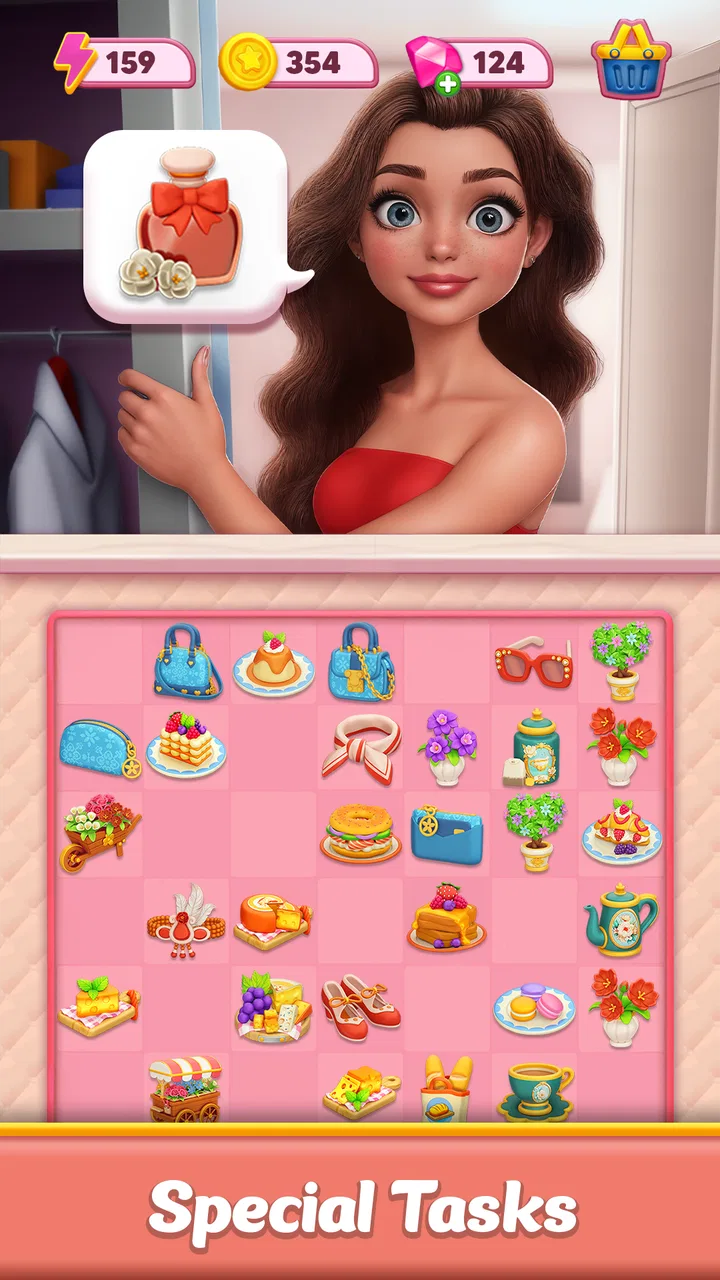
Merge Studio: Fashion Makeover is the kind of puzzle game I open when I want something light, visual, and easy to understand within a minute. I match and merge items, use the results to move through fashion-focused tasks, and gradually shape outfits and makeup choices around the game’s makeover theme. It comes from Paxie Games and sits in the puzzle category, but its appeal is broader than simply clearing a board: it combines short matching sessions with a steady sense of visual progress.
I found the basic loop approachable enough for casual play, while the wardrobe and makeup elements give each completed task more personality than a plain matching board. The game is free to start, rated Everyone, and supports devices running Android 7.1 or later. It has reached over 10 million installs, with a 4.2 average from around 155 thousand ratings, so it is clearly aimed at a wide audience rather than a small group of specialist puzzle players.
How the everyday workflow feels
My usual session starts with a quick look at the available board and the immediate makeover objective. Instead of treating every move as an isolated match, I try to understand what the board is offering before tapping. If several low-level items are already close together, I merge those first and watch how the new pieces change the available space. That small pause matters because a careless merge can leave useful items separated or make the next few moves feel unnecessarily cramped.
You May Also Like

 Blood Strike: 2.5 Anniversary
Blood Strike’s Loadouts Turn Every Drop Into a Tactical Gamble
A close look at Blood Strike’s custom loadouts: how fast access to signature weapons reshapes its battle royale rhythm, rewards preparation, and narrows the gap between fights.

 Pandora - Music & Podcasts
Pandora’s Music Is Easy to Start, but Harder to Recover
Pandora’s strength is its low-effort path from a seed to a station. Its weak spot is how much confidence it asks you to place in connection, setup, and quiet recovery.

 8 Ball Pool
 Is Built on Rivalries, Rematches, and Routine
A close look at the rivalries, rematches, shared routines, and unanswered safety questions that turn a quick pool match into a persistent mobile community.

 Samsung Music
’s Quiet Strength Is Playing What You Already Own
Its reach comes less from spectacle than from dependable access to a personal library. That simplicity is both the app’s strongest retention engine and its ceiling.

 AccuWeather: Weather Radar
AccuWeather Review: A Quick, Clear Forecast for Everyday Decisions
For everyday plans, the best forecast is the one you can understand quickly. AccuWeather makes rain timing, radar, and local conditions easy to act on, with a few trade-offs.

 Hill Climb Racing
Why Hill Climb Racing Still Turns Crashes Into One More Run
A tiny car, a bumpy hill and one more upgrade: Hill Climb Racing keeps resurfacing because its simple chaos makes every near-miss feel personal.
More From Our News Desk
View All News


The most comfortable way to play is in short bursts. I can complete a few actions while waiting for a meal, take a longer session when I want a more relaxing distraction, or stop after reaching a natural point in the makeover progression. It does not demand the same concentration as a traditional logic puzzle, yet it still gives me enough choices to avoid feeling like I am only watching animations.
The fashion layer gives the matching work a clear reason. I am not just combining anonymous tiles with no context; the results contribute to a character’s appearance and the surrounding makeover journey. That connection is especially useful for players who enjoy decorating, styling, and seeing a visible change after a sequence of small decisions.
One practical habit improved my sessions immediately: I stopped spending every available item as soon as it appeared. I now keep a mental distinction between pieces that solve the current request and pieces that may help create a higher merge later. This is not a complicated strategy, but it prevents the board from becoming a collection of half-finished combinations that are awkward to use.
What I check before making a move
Before tapping, I scan three things: open spaces, nearby matching items, and the next useful combination I can reasonably create. The open-space check is easy to overlook because the clothing and makeup presentation draws attention away from the board. When the area becomes crowded, a move that looks productive can actually reduce flexibility. Clearing a simple pair may be better than chasing a more ambitious combination that blocks several lanes.
I also avoid making decisions solely because an item is visually prominent. The most noticeable piece is not always the one that helps the current objective. I compare it with the rest of the board and ask whether merging it now creates a useful result or merely removes an option. That approach makes the game feel more deliberate without turning it into a spreadsheet exercise.
For newcomers, the best starting routine is simple: complete the obvious matches, observe what the new result unlocks, and leave a little room around active pieces. After a few sessions, the board becomes easier to read. The game’s gentle presentation encourages quick tapping, but a few seconds of planning usually produces a smoother run.
Settings and play habits worth checking
I recommend checking the game’s available settings before settling into regular play. The useful question is not whether every option needs changing, but whether the presentation suits the way you intend to play. If you prefer quiet sessions, review the sound and music controls. If you play in shared spaces, reducing audio is more comfortable than repeatedly adjusting the device volume.
Notification preferences are also worth considering at the device level. A makeover game is easy to return to, but it does not need to interrupt unrelated activities. I prefer opening it when I choose rather than allowing a casual puzzle session to dictate my schedule. This is a small quality-of-life habit, especially for anyone using the game during work breaks or before sleep.
The game is free, although optional in-app purchases range from $0.99 to $99.99 per item. I would decide on a spending boundary before playing rather than making that decision in the middle of a tempting progression moment. The free entry point makes it easy to test the core loop, while a personal limit keeps the experience aligned with its role as a casual game.
I also pay attention to the device itself. Since the minimum operating system is Android 7.1, compatibility is relatively accessible for older Android hardware, but the experience can still vary with screen size, battery condition, and how many other apps are active. On a smaller display, I take a little more care with taps so that a quick move does not become an accidental one.
Faster patterns that still leave room to think
Speed in Merge Studio: Fashion Makeover does not come from tapping as quickly as possible. It comes from repeating a reliable sequence. I first clear straightforward pairs, then inspect the new arrangement, and only after that commit to a larger combination. This rhythm reduces the number of moments where I have to undo a poor decision mentally, even when the game is designed for relaxed play.
A second useful pattern is to work from the edges of a crowded area toward the center. Removing pieces from the outside can create room without immediately disturbing every option in the middle. I do not follow this rule rigidly, because the current objective may make a central merge more valuable, but it is a helpful default when the board begins to feel congested.
I also try to group my attention by purpose. If the current makeover task needs a particular type of result, I prioritize the chain that supports it instead of merging every available pair. This makes progress feel faster because each action contributes to a visible goal. It also prevents the common casual-game habit of clearing whatever is easiest while forgetting what the stage actually asks for.
Another practical tip is to pause after a successful merge rather than immediately repeating the same gesture. New pieces can alter the best route, and the attractive visual feedback can make it tempting to continue on autopilot. I use the pause to reassess space and decide whether the next move should build, clear, or simply preserve flexibility.
For a realistic everyday scenario, imagine opening the game during a ten-minute commute break. I would choose the most obvious low-risk matches first, avoid starting a long chain that depends on several future pieces, and stop after a clean objective or a comfortable board state. That approach makes the session satisfying even if I do not have time to finish a larger sequence.
Where the makeover design helps, and where it gets in the way
The strongest part of the presentation is the relationship between puzzle progress and personal styling. Wardrobe changes and makeup choices make outcomes feel more concrete than a score alone. I enjoy that the game gives visual context to otherwise familiar matching actions, especially when I want something more expressive than a standard abstract puzzle.
At the same time, the fashion theme will not be equally motivating for everyone. If you want a pure logic challenge with increasingly demanding deduction, this may feel too decorative and forgiving. The makeover layer is central to the identity of the game, so players who are uninterested in clothing or appearance-based customization may find the rewards less compelling.
The presentation can also encourage a slightly slower pace than a minimalist match game. There is more to look at than the board itself, and that is part of the charm, but it means the experience is not designed around rapid competitive solving. When I want a quick score chase or a strict time-based challenge, I would choose a more focused puzzle alternative instead.
Advanced limits and the trade-offs of free play
Experienced players can improve their consistency, but no habit removes the basic trade-off between immediate progress and future flexibility. Saving too many pieces can crowd the board; merging too aggressively can eliminate useful options. The best decision depends on the current arrangement, which means there is no single shortcut that solves every stage.
I also would not describe the game as a replacement for a deep strategy title. Its strength is the combination of accessible matching and makeover progression, not a highly technical ruleset. Players looking for complex planning, competitive rankings, or a long-form narrative should set their expectations accordingly. I see it as a polished casual routine rather than a demanding puzzle laboratory.
The purchase structure deserves the same balanced view. Being free makes experimenting easy, and the game can fit a no-commitment download decision. However, the range of optional purchase prices means users should be comfortable managing their own spending. For children, the Everyone rating describes the content level, but I would still use the device’s purchase controls and supervision tools where appropriate.
The game’s current version is 4.4.7, which is useful to know when checking whether an older installation is up to date. I would keep the app updated through the normal store process when possible, particularly if the game behaves differently after a device change. That is less about mastering the board and more about avoiding confusion when the installed experience is not current.
Who should play it, and who should skip it
I would recommend Merge Studio: Fashion Makeover to players who like match-and-merge mechanics but want a visible creative layer around them. It suits someone who enjoys short sessions, light planning, wardrobe changes, and makeup-focused progression. It is also a friendly choice for a family member who finds conventional puzzle games intimidating but enjoys making small decisions with immediate visual feedback.
I would be more cautious recommending it to anyone who dislikes free-to-play structures, even when optional purchases are not required for the initial download. I would also point serious puzzle fans toward a more demanding alternative if their priority is intricate deduction rather than styling progression. Likewise, people who want a completely quiet, stripped-down interface may prefer a minimalist matching game.
Compared with a basic match-three title, this game gives my actions more cosmetic context and a stronger sense of character-focused progression. Compared with a dedicated dress-up app, it asks me to earn styling progress through puzzle decisions rather than simply selecting from a wardrobe. That middle position is its main reason to exist: it is neither only a board game nor only a fashion editor.
My verdict after settling into the routine
After adjusting my play style, I found the game most enjoyable when I treated it as a calm planning activity rather than a race. The best results came from preserving space, following the current makeover objective, and resisting unnecessary taps. Those habits are simple, but they make the difference between a smooth session and a board that feels needlessly blocked.
The real strength is the balance between small puzzle decisions and visible makeover progress. The game does not need complicated systems to be engaging; its appeal comes from making ordinary merges feel connected to a character and a style journey. That is also why its limitations are clear: the experience is intentionally casual, and the fashion presentation will not appeal to every puzzle player.
For me, this is a good free game to keep installed for relaxed breaks, particularly if I want something more colorful and goal-driven than a standard matching board. I would approach the optional purchases thoughtfully, check the sound and notification settings, and use the space-first strategy from the beginning. With those expectations, Merge Studio: Fashion Makeover is an easy recommendation for casual fashion-and-puzzle fans, while dedicated logic players should look elsewhere for a tougher challenge.
FAQs for Merge Studio: Fashion Makeover
01What is Merge Studio: Fashion Makeover about?
Merge Studio: Fashion Makeover is a casual makeover game that combines merge-style puzzles with fashion and beauty customization. You complete merge tasks to obtain useful items, earn rewards, and progress through makeover projects. As you advance, you help characters improve their appearance by choosing outfits, hairstyles, makeup, and other visual details, while also unlocking new story moments and design options.
02How does the merging gameplay work in Merge Studio: Fashion Makeover?
The main gameplay involves combining matching objects on a board to create upgraded items. These items are then used to complete orders, objectives, or makeover-related tasks. Energy and available board space can affect your progress, so planning merges instead of combining items randomly is important. The mechanics are easy to understand, although later stages may require more patience and resource management.
03Is Merge Studio: Fashion Makeover free to download and play?
Merge Studio: Fashion Makeover can generally be downloaded and played without an upfront purchase, but it may include optional in-app purchases. These purchases can provide extra energy, speed up progress, unlock resources, or offer special bundles. The game is designed to be playable for free, although players who want faster advancement may encounter purchase offers during longer play sessions.
04Does Merge Studio: Fashion Makeover require an internet connection?
An internet connection may be needed for certain features, including loading advertisements, processing purchases, receiving events, synchronizing progress, or accessing updated content. Some basic gameplay may work temporarily while offline, but this should not be assumed for every version or device. Connecting to Wi-Fi or mobile data is recommended if you want the complete experience and reliable progress saving.
05Is Merge Studio: Fashion Makeover suitable for children?
The game uses colorful visuals, simple touch controls, and makeover-themed challenges that can appeal to younger players and casual gamers. However, parents should review the age rating and privacy information before installation because the app may contain advertisements, optional in-app purchases, and links to external services. Younger children may also need supervision to avoid accidental purchases or excessive playtime.
Pros
- Relaxing merge gameplay is easy to learn and play in short sessions.
- Fashion transformations provide clear visual progress and satisfying results.
- Large selection of outfits
- hairstyles
- makeup
- and décor items.
- Story-driven tasks give the makeover levels a sense of purpose.
- Colorful graphics and simple controls suit casual players of many ages.
Cons
- Energy limits can interrupt play when completing several tasks in a row.
- Some premium items and upgrades may require frequent in-app purchases.
- Later levels can become repetitive once the core merge loop feels familiar.
- Ads may appear between activities or be offered for extra rewards.
- Progress may feel slow without waiting
- watching ads
- or spending currency.

Merge Studio: Fashion Makeover
Gallery